
 By admin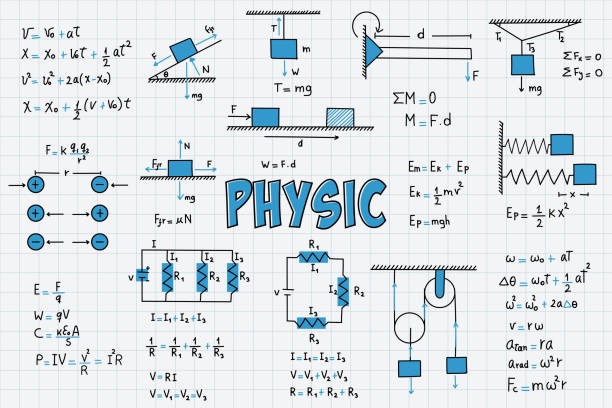
The West African Examinations Council (WAEC) physics exams consistently focus on several key areas that candidates must thoroughly understand to perform well. These topics form the foundation of the syllabus and often appear in various forms, including theoretical questions, numerical problems, and practical applications. One of the most frequently tested areas is mechanics, which deals with the motion of objects and the forces acting upon them. This section typically covers concepts such as kinematics, dynamics, work, energy, power, and laws of motion. Students are expected to solve problems involving velocity, acceleration, force calculations using Newton’s laws, as well as energy transformations in mechanical systems.
Another critical area regularly featured in WAEC physics exams is electricity and magnetism. Questions from this domain often explore electric circuits, Ohm’s law, resistance in series and parallel combinations, electromotive force (EMF), current electricity principles, magnetic fields around conductors carrying currents, Physics waec past questions and electromagnetic induction. Candidates must be able to analyze circuit diagrams accurately and calculate quantities like current intensity or potential difference under varying conditions. Understanding how magnetic forces interact with moving charges or currents also plays a significant role in exam questions.
Optics is another important topic that appears frequently on WAEC papers. It involves studying light behavior through reflection and refraction at different surfaces such as mirrors or lenses. Students should be comfortable applying Snell’s law to determine angles of incidence or refraction when light passes between media with different refractive indices. The formation of images by concave or convex lenses or mirrors often serves as a basis for problem-solving exercises requiring precise calculations related to focal length or magnification.
Thermodynamics also holds considerable weight within WAEC physics exams due to its relevance in understanding heat transfer processes and temperature changes affecting physical systems. Topics under this area include specific heat capacity determination methods for solids or liquids using calorimetry principles alongside explanations about conduction convection and radiation modes of heat transfer.
Wave phenomena consistently feature across multiple exam sessions because they underpin many physical processes encountered daily as well as technological devices utilized worldwide today. Students need familiarity with wave properties such as frequency wavelength amplitude speed superposition interference diffraction Doppler effect resonance standing waves harmonics sound waves characteristics pitch loudness quality among others.
Finally practical skills related to experimental physics cannot be overlooked since WAEC emphasizes candidates’ ability not only to grasp theory but also apply it during laboratory activities where measurements data analysis graphical interpretation error estimation all come into play ensuring comprehensive understanding beyond textbooks alone.
In conclusion mastering these core areas-mechanics electricity magnetism optics thermodynamics waves alongside solid practical knowledge-equips students adequately for tackling diverse question types posed by WAEC physics examinations thereby enhancing their chances for success significantly within this challenging subject domain.